
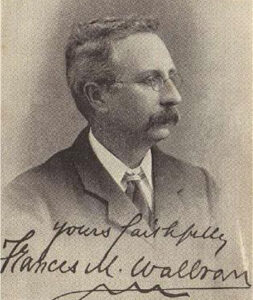
Tanfield Angling Club was founded in 1892 by Francis Maximilian Walbran (1851–1909), an energetic fly fisherman, gifted journalist, and lifelong devotee of the sport.
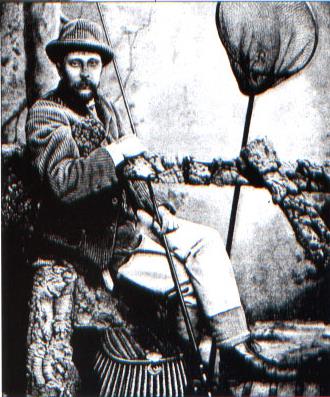
Born and educated in Ripon, Walbran discovered fishing as a teenager through his father and older cousin. Although he began his career as a travelling salesman for a Leeds branch of a Hull-based dyestuffs company, every spare moment was spent on the water.
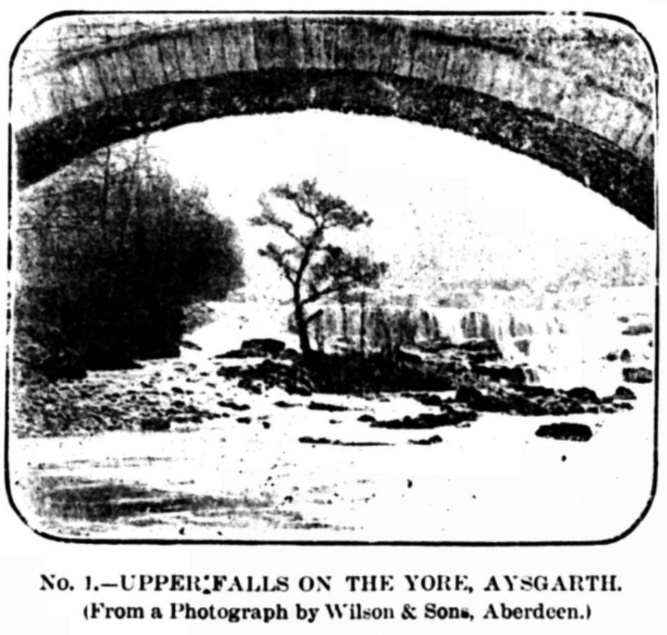
By 1877, his letters on fishing—especially on the River Yore around Tanfield and Masham—were appearing in the Fishing Gazette. The arrival of the Leeds–Harrogate railway and its branch line to Tanfield in 1885 only increased interest in the area. A year later, The Field began publishing his reports, soon appointing him “Special Yorkshire Correspondent.” Eventually, he left his sales job to pursue journalism and fishing full‑time.
Walbran married, moved his family from Leeds to Pool in Wharfedale, and in 1887 named his fourth child George Marston—honouring the editor of The Field, who later became an Honorary Member of the new club. His articles often described memorable days on the Yore, including one outing where he caught 19 grayling (17 lb) and trout totalling 16¼ lb. He also offered guiding services in the Tanfield and Masham area. One early piece ominously recounts a “sudden ducking” in the freezing Wharfe.
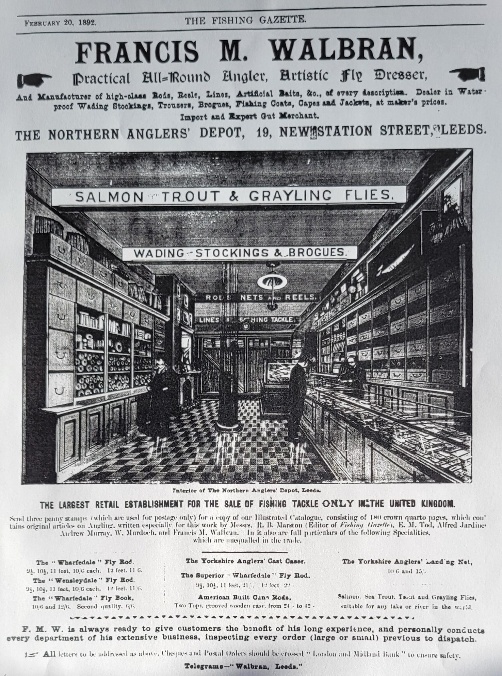
By the late 1880s, Walbran was recognised as an authority on trout and grayling. In 1888 he opened the Northern Angler’s Depot near Leeds station—perfectly placed for travelling anglers. He advertised himself as an “Artistic Flydresser” and produced both a Guide to Yorkshire Streams and a 120‑page illustrated catalogue. His lectures, accompanied by “100 limelight views” of the Yore and Wharfe, drew large audiences eager to see the region’s scenery.
Founding Tanfield Angling Club
Walbran’s deep affection for the Yore around Tanfield, combined with his network in the angling press, helped him rally support for a new club. He knew the stretch offered excellent sport—“the head of grayling was particularly notable”—and that its scenery and atmosphere were ideal for anglers. Rumour suggests he also appreciated the two nearby pubs!
He secured a 21‑year lease from riparian owner Thomas Arton for exclusive fishing rights from the upper end of Hackfall to a mile below Tanfield Mill, with only a few short exceptions on the south bank.
On 8 March 1892, twenty of the thirty founding members met at the Queen’s Hotel in Leeds to formally establish Tanfield Angling Club. The committee included:
- Chairman: Arthington Worsley (York)
- President: Marquis of Ripon
- Vice President: Thomas Arton (Tanfield Lodge)
- Treasurer: W. G. McLaughlin
- Hon. Secretary: Francis Walbran
Honorary Members elected at Walbran’s proposal were:
- William Senior (“Redspinner”), The Field
- F. M. Halford (“Detached Badger”), The Field
- R. B. Marston, Editor, Fishing Gazette
The lease cost £40 per year. Joining fees were two guineas, with annual subscriptions set at four guineas.
Three months later, the Fishing Gazette reported:
- River Watcher: Ralph Coldbeck
- A hatchery was being built
- Yearling trout had been stocked
- Club waters extended 6¼ miles, from Hackfall Woods to the Bell Flask weir below West Tanfield
Membership rules included:
- Maximum 30 members
- Up to three guest day‑tickets per member (2s 6d each)
- Trout season: April 1–October 1
- Grayling season: August 1–February 15
- Minimum trout size: 8 inches
- Permitted methods: artificial fly, minnow, or worm
The Hatchery
Knowing the river lacked natural spawning streams, Walbran understood that regular stocking was essential. The club therefore built its own hatchery—likely with significant help from River Watcher Ralph Coldbeck. The original building still stands.
Today, the hatchery produces around 1,000 trout annually from brood-stock taken and returned to the River Ure. After growing on, most are released into the river, with some sold to other clubs on the Yore. This self‑sustaining approach, overseen by the River Keeper, remains central to the club’s success and distinctive appeal.
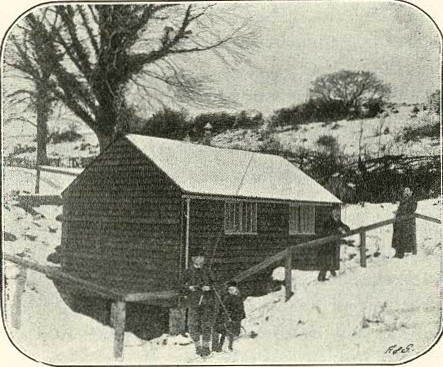
Photo taken c.1895
Walbran’s Final Years
Walbran served as club secretary until his tragic death on 15 February 1909, when he drowned on his favourite stretch below Tanfield Bridge—the last day of the grayling season. He is buried at St Nicholas Churchyard, West Tanfield.
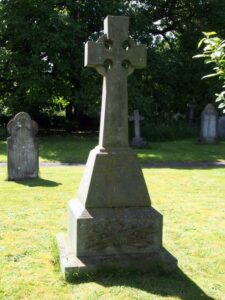
Walbran’s Gravestone
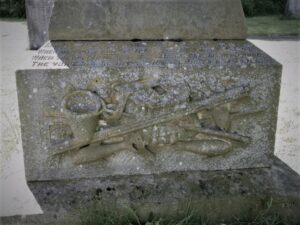
Pedestal inscription:
“And there shall the toiler rest from his labour
When memory’s bright stream shall become not a rill,
When the rude hand of time shall spare not his neighbour
The voice of the river shall sing to him still.’
Below this, his net, rod and creel are carved – along with three Grayling.
Publications and Influence
Walbran’s contributions to angling literature were substantial. His works include:
- British Angling Flies (revised editions, 1882 & 1888)
- British Angler: Salmon Trout and Grayling (1889)
- The Northern Angler weekly journal (1892)
- Piscatorial Hints (1893)
- Grayling and How to Catch Them (1895)
He wrote for The Field (“Wharfedale”), Leeds Mercury and Yorkshire Evening Post (“Halcyon”), and the Fishing Gazette.
A founder member of London’s Fly Fishers Club, he fished with pioneers such as Frederick M. Halford and G. E. M. Skues. He also served on numerous angling associations across Yorkshire.
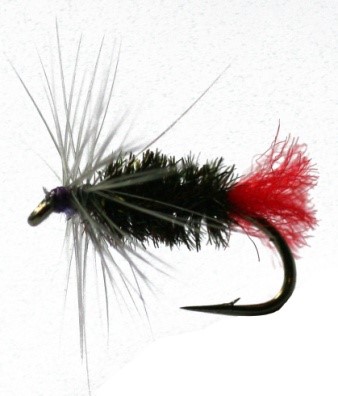
Walbran credited himself with introducing the Red Tag to Yorkshire rivers in 1878, calling it “probably the very best” grayling fly. On its first outing on the Yore, he caught 25 grayling with it.
The River Keepers and the Sturdy Dynasty
Tanfield Angling Club has always employed a river keeper. After Ralph Coldbeck retired in 1895, J. Wild briefly held the role until 1899, when Tom Sturdy—first of a remarkable family line—was appointed “Beck Watcher” at £1 per week.
Known as “Silent Tom,” he was reputed to “train fish to be free risers,” perhaps aided by his successful grayling pattern, Sturdy’s Fancy—a Red Tag variant with a white hackle.
Tom served for 50 years, training his son Norris to succeed him in 1949. Poor health forced Norris to step down, and Tom’s nephew William (Bill) Sturdy took over in 1953, serving until 1987. In total, the Sturdy family dedicated 88 years to the club. Norris’s twin sister, Doris, continued selling guest tickets until 1992.
Sturdy’s Fancy
The Tanfield Angling Club Centenary
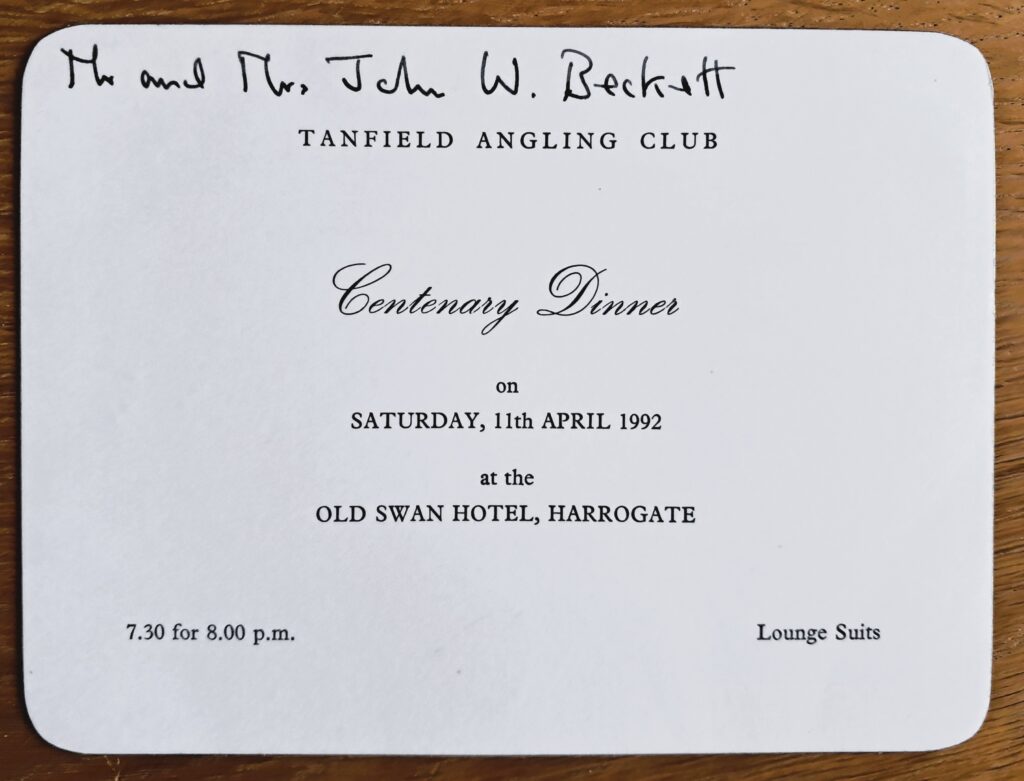
The Tanfield Angling Club was born on Tuesday, 8 March 1892. A century later, on 11 April 1992, fourty members and 102 guests marked this historic milestone with a grand Centenary Dinner held at the Old Swan Hotel in Harrogate.
An Evening of Heritage and Wit
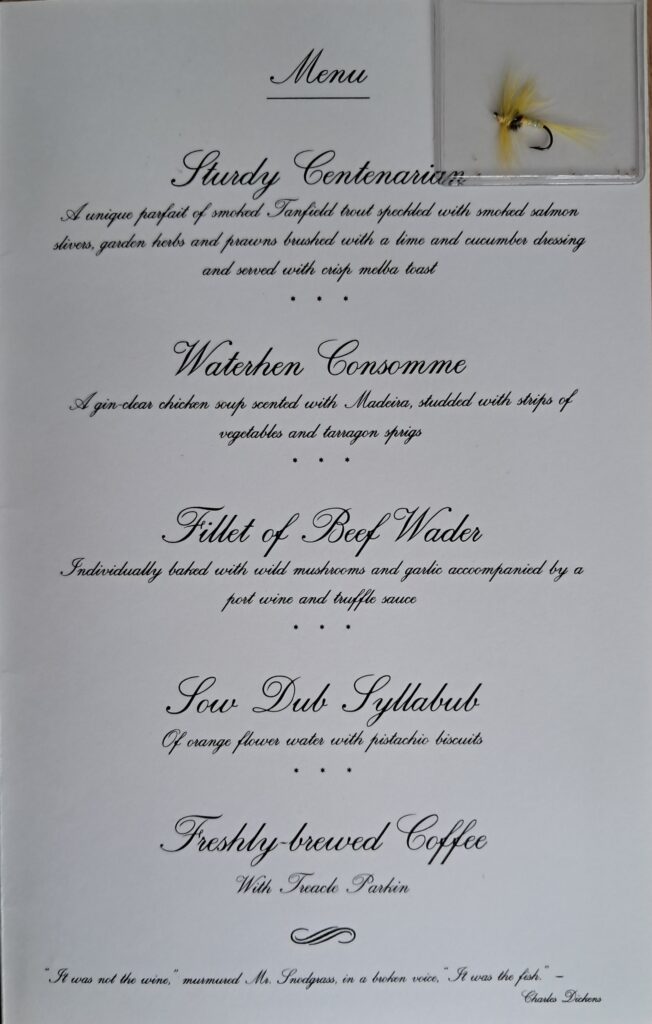
The evening was an elegant affair, featuring a bespoke five-course menu that playfully nodded to the life of an angler. Guests were treated to:
- Waterhen Consommé
- Fillet of Beef “Wader”
- Sow Dub Syllabub
The centrepiece of the evening was an address by the Club Secretary, Mr. John Whitfield. His speech, a tribute to its founder, Francis Walbran, was repeated a month later at the club’s AGM at the hatchery and immortalized in a special Centenary edition of the club’s annual report.
High Praise from Fleet Street
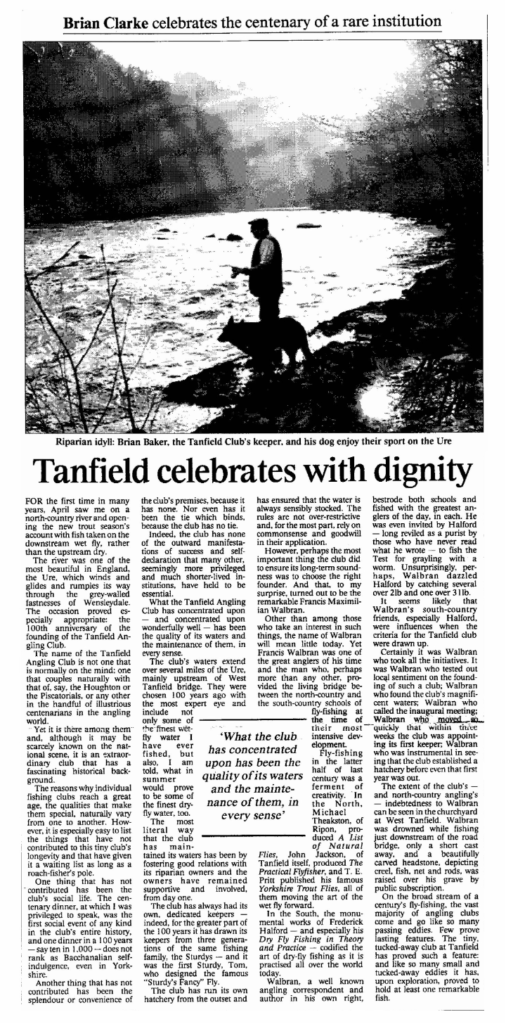
The night’s Guest of Honour was Mr. Brian Clarke, the Fishing Editor for The Times and The Sunday Times. The celebration clearly left an impression; the following month, Clarke published a glowing feature in the national press. He praised the club’s enduring success, the contributions made by the ‘Sturdy’ keepers dynasty and highlighted the pivotal role played by Francis Walbran in the club’s original formation a century prior.
A Lasting Memento
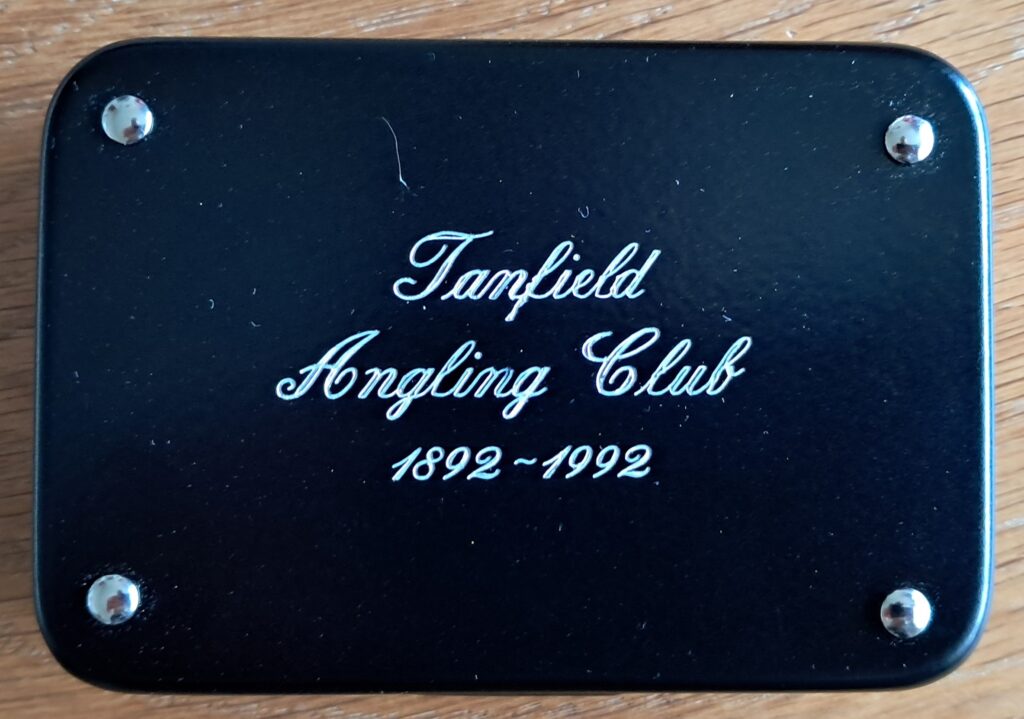
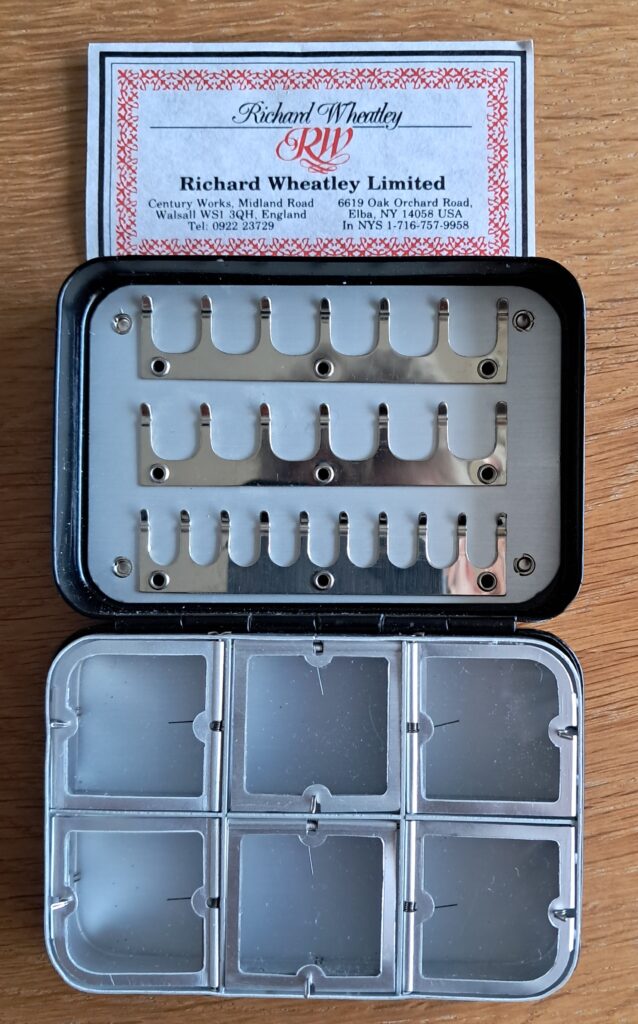
To ensure the milestone was recalled by its members, the club commissioned a limited run of 50 bespoke fly boxes from the renowned Richard Wheatley Ltd. Each box was meticulously engraved with the club’s name and the dates 1892–1992 and remains a functional piece of history for the modern angler.
ddd kj;h;kjh
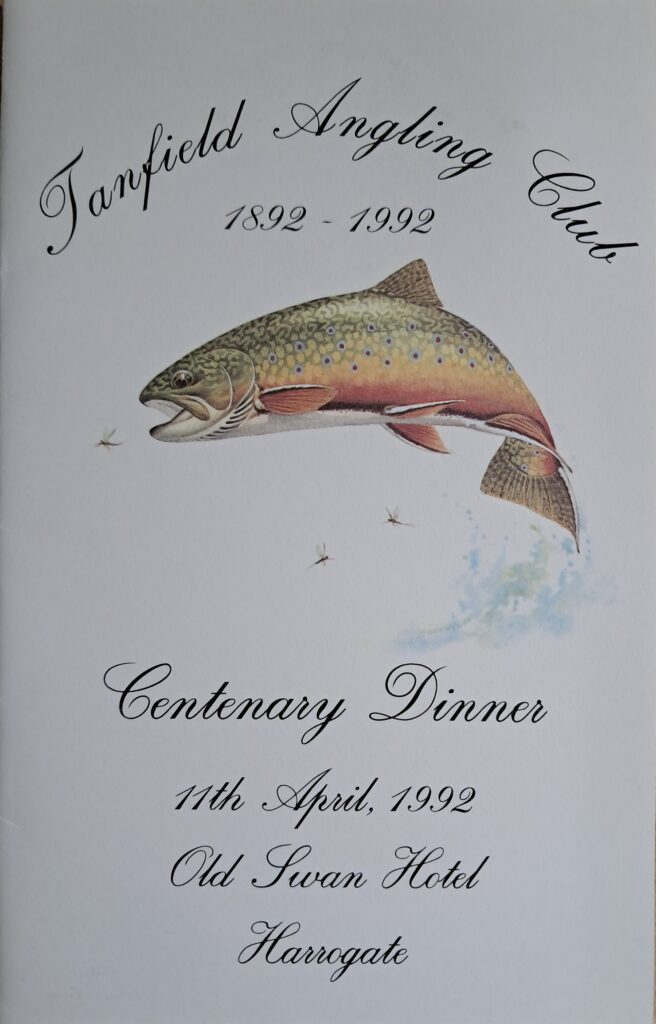
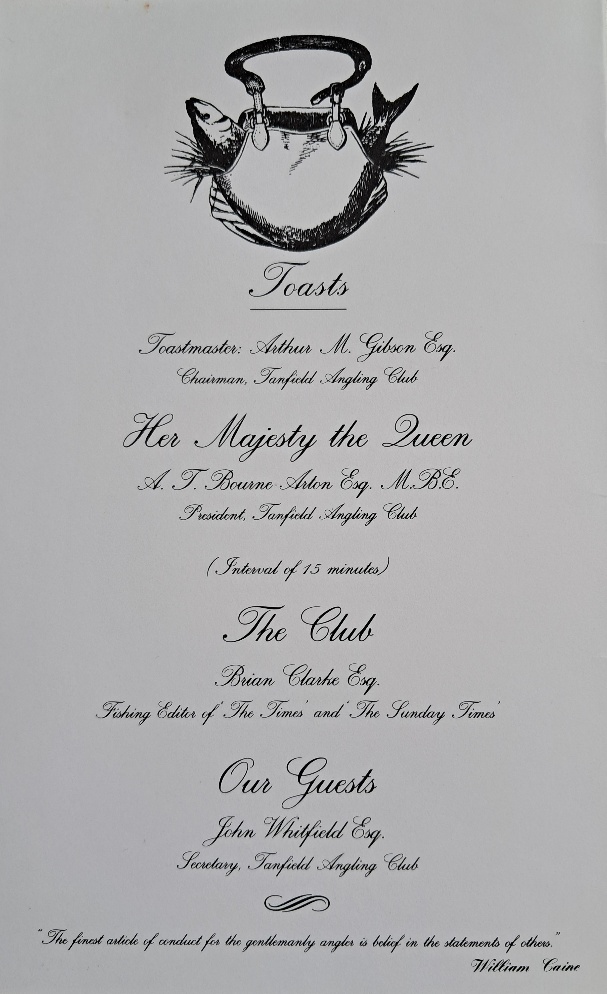
At the Annual General Meeting of the Club held at The Hatchery, West Tanfield on 9th May 1992, it was agreed that, it being the Club’s Centenary Year, the Secretary’s Report should be the speech setting out the Club’s history which he gave at the Centenary Dinner held at The Old Swan Hotel, Harrogate on 11th April 1992, at which were present 40 members and 102 guests.
This was as follows:-
Tonight is not simply a unique gathering, it is a unique occasion, this Club not having held a social event of this kind throughout the 100 years of its history. Our presence here this evening undoubtedly must be attributed to the initiative of Mr Francis Maximillian Walbran who, in the winter of 1891/1892, conceived the splendid idea of forming an angling club on a river in Yorkshire: “where the fish were plentiful, the scenery was good and the environment eminently suitable to the angling fraternity” ie. in the immediate vicinity of two taverns.
Mr Walbran was a well-known writer of books on fishing. He was also a fishing tackle dealer of some renown whose business was based in the City of Leeds. Amongst other tomes, he was the author of the classic work “Grayling and How to Catch Them” and “Recollections of a Sportsman”. Not only was he a purveyor of fishing tackle and author of books, he was, like our principal guest and speaker Mr Brian Clarke who is the Fishing Editor of “The Times”, a journalist as well as being a prolific writer of fishing articles. His nom de plumes included,
“Halcyon” of “The Leeds Mercury”, and “Wharfedale” of “The Field”. He was also the Special Yorkshire Correspondent of The Fishing Gazette. He was author of “The British Angler” reviser of Theakstone’s “British Angling Flies” and, again like our distinguished guest speaker Mr Brian Clark, a member of the London Fly Fishers Club.
On the 8th March 1892 the said Francis Maximilian Walbran having first approached a number of his customers and brother anglers, convened a meeting at the Queens Hotel in Leeds. Twenty enthusiastic anglers, under the chairmanship of Mr Arthington Worsley, attended this most historic gathering and heard Francis Maximillian Walbran reveal the secret of his find at Tanfield and the fact that he had negotiated with Mr Thomas Arton a lease for 21 years of the fishing rights in the river Ure over the full extent of the Tanfield Lodge Estate. May I say how delighted we are to have so many of the Arton family here tonight: Lt. Col. & Mrs Dennis Bryant and Mr & Mrs Christopher Bourne Arton. His Honour Judge David & Mrs Bryant and Mr & Mrs Richard Bourne Arton. Our one great regret is that our President Mr Anthony Bourne Arton and his wife Elaine are unable to be with us, owing to their indisposition.
At the inaugural meeting of the club it was recorded that, after due deliberation, the Chairman Mr Worsley rose and proposed the following toast “Every success and long life to the success of the Tanfield Angling Club and tight lines to its members wherever and whenever they may angle”. This toast was received with tremendous enthusiasm by all present and was honoured in the ancient and traditional manner at angler’s meetings ie. one round of doubles at the expense of the Chairman. After this christening ceremony, business was resumed. The Marquis of Ripon was appointed President, Mr Thomas Arton Vice-President, Francis Maximillian Walbran secretary and William George McLaughlin honourary treasurer. The purposes of the Club were defined, a set of rules drafted and an annual subscription of four guineas per member fixed. At this very first meeting it was decided that the waters rented by the Club should be stocked annually with trout and that the Club should provide and operate its own hatchery for this purpose. Construction of the hatchery was completed before the end of that year on 17th December 1892 and 30,000 eyed ova were immediately purchased and placed in the hatching boxes on or about that date.
There is little doubt that the unique reputation the Club has enjoyed during the 100 years of its life is due in no small measure to the wisdom and forethought of our first 20 members in deciding to provide a hatchery which has been operated almost with complete success since its completion in 1892. Unquestionably it has always been and will remain one of the Club’s most valuable assets.
The original 20 members also decided that no effort should be spared to obtain for the Club a reputation in the angling world and with this object in view they passed the following further resolution at the inaugural meeting:- “That Mr W. Senior Angling Editor of “The Field”, Mr R.B. Marston Editor of “The Fishing Gazette” and Mr F M Halford author of “Floating Flys” be and are hereby elected as honourary members of the club, on account of the great services rendered by them to the angling community at large.”
Three weeks following the meeting the Secretary had appointed Mr. Ralph Colbeck as river watcher for the Club at a weekly wage of £1.
At the first annual general meeting of the Club held on 22nd March 1893, in order to put the Club’s finances on a firm footing, it was decided to introduce an entrance fee of three guineas.
The costs of constructing the hatchery had been the princely sum of £112.13s.9d, rates were 10d in the pound and the liver bill for feeding the trout in the hatchery apparently ‘never less than 3d per week’. The Club was on its way.
It is very pleasant and comforting that so many ladies have decided to attend this great occasion tonight. It would seem that involvement with the fair sex is a tradition of this great Club. The Club was, we must recall, founded during the naughty nineties and the gay abandon prevalent at that time was not unknown to the original 20 members. At the first annual general meeting in March 1893 a resolution was also passed:- “That a picnic should be held during the summer months at Hackfall and that members be privileged to invite lady friends.” However no further mention of the carrying into effect of this resolution appears in the minute books of the Club and it can therefore only be presumed that either bad weather caused its abandonment or the members wives got to hear about it.
However it would seem that Mrs Walbran did not accompany her husband when he went fishing. With your indulgence, I will read to you a small extract from “Grayling and How to Catch Them” written in prophetic manner (as it unfortunately proved to be) by our founder secretary. “At length the landlady announced that my clothes were perfectly dry and then did it begin to dawn upon me that when I reached home my troubles would not be at an end; for it was extremely probable that upon hearing of my adventure Mrs W would cut up rough, hurl all manner of invectives against my beloved sport and wind up a half hour’s dissertation upon the insanity of going fishing in winter, with a solemn declaration that she knew very well that it would end some day in me being brought home drowned. However this new danger had to be faced, so about 7.30 I bid my friends goodnight and some half hour later entered my domicile. ‘You are late Max’ remarked my wife looking up from the book she was reading ‘You said you would come by the 4.20 train and we waited tea for you’! ‘Yes dear’ I replied, in as careless a tone as I could assume; ‘But unfortunately I fell into the river, and was obliged to wait until my clothes were dried’.
“And then the storm burst. It is very seldom that the cara sposa makes any remark adverse to angling, for we made a compact on that point many many years ago; but on this occasion the course of events ran exactly as I had expected and for an hour I experienced a most joyous time. I knew that explanation would be of no avail, so I simply sat it out, smoking my pipe in front of the fire and when the oration finished with the aforesaid prophecy relating to my demise, I arose, knocked the ashes out, quite coinciding with all she had said and retired to bed”.
In 1896 strenuous efforts were made to reduce the number of scale fish in the Club’s waters, although some of the methods adopted to achieve this end have a savour of illegality about them as is rather borne out by the fact that they are unknown to the modern angler. There appears for instance in the minute book of the Club under a date in 1896 the following entry “Blazed river for barbel from Bell Flash to Tanfield Mill, killed 12 barbel, 9 pike, 5 chubb and 2 eels”. A diligent search through Hardy’s catalogues and other well-known piscatorial works usually found in every angler’s library has failed to elucidate the meaning of the verb ‘to blaze’. It is also clear from the annals of the Club that over the years the merciless killing of pike has been undertaken whenever one was seen.
March 1st 1899 was and always will remain a red letter day in the history of the Club. On that day Tom Sturdy known as “silent Tom” was appointed Water Bailiff at the munificent salary of 20s. per week. To Tom Sturdy and his family, the Club owes an immeasurable debt of gratitude. Three members of the Sturdy family Tom, his son Norris and his nephew William were the keepers for the Club from 1899 until Bill’s recent retirement in 1987. Norris’s twin sister Doris also has sold guest tickets to members from 1954 until this year, when she decided to retire from this activity. There is no doubt the dedication and loyalty of the Sturdy family to the Tanfield Angling Club has been mainly responsible for the reputation which the Club now enjoys, resulting amongst other things in our waiting list for members being consistently longer than the membership list of the Club itself.
However the history of the Club has not been without tragedy. On 1st February 1909, the last day of the Grayling fishing season, the humourous musings of the author of “Grayling and How to Catch Them” became tragic reality, when Francis Maximillian Walbran was drowned whilst fishing just below Tanfield Bridge. The Club’s first secretary was buried in Tanfield Churchyard alongside the river he had loved and the Club which he had created and it was reported that a great concourse of anglers attended his passing. Speculation still abounds as to the precise circumstances or cause of our first secretary’s death, but a noble tombstone is erected in the Churchyard to his memory. At this point in the proceedings, I think it appropriate for us all to be upstanding and to raise our glasses to the memory of Francis Maximillian Walbran, the first secretary and prime mover behind the establishment of this great Club.
Mr Walbran was succeeded as secretary by Mr Charles Rishworth who held the post until 1917, then briefly handing it on to Dr. R.W.S. Bishop, but taking over the job again in 1919. In 1913 Mr W. Denby Arton the first chairman of the Club’s Committee became its Vice-President. In 1920 salmon were reported to be appearing in the river. In 1927 Mr Herbert Whitfield (no relation to myself) took over as Secretary of the Club and in 1932 the Club appointed its first lady member, a Miss Armitage of Headingley. Also in 1932 the Club Committee began introducing rules restricting fishing to fly only between the bottom of Rocky Stream and the top of First Island. In 1937 the Club’s annual general meeting was re-located from The Bruce Arms to The Bull Inn. For many years the Club had its own room in the Bull Inn where was displayed a map of the Club’s waters and other memorabilia which still exist to this day.
In 1938, the very important event took place when Miss Elaine Arton became married to our current President. Bourne-Arton Family have been such tremendous supporters and patrons of the Club throughout its history that I think this is an occasion for us to drink a special toast specifically to their health. By 1939 the reputation of Thomas Sturdy had reached such heights that he was credited at the annual general meeting held that year with the ability of being able, and I quote, “to train the hatchery fish to be free risers to the fly”. The mind boggles as to what form this training took, but Bill will no doubt be able to reveal the techniques to intrigued members in the bar after this dinner. Perhaps the Sturdy’s Fancy had some role to play in the training process. The Sturdy’s Fancy is of course really a grayling fly and so it seemed appropriate to your Committee that in memory of the great debt the Club owes to the Sturdy family, that a new trout fly should be commissioned and inaugurated at tonight’s dinner. This is the Sturdy Centenarian, one of which you will find attached to each of your menu cards. The Club is greatly indebted to Mr Stan Schofield, not a member but a great friend and supporter of the Club for many years, for having tied each and every one of these flies. Like our Centenary itself this fly is for the special occasion, being not an everyday pattern. It is to be used when the May Fly and the Yellow Sally are on the water and Stan tells me will be most effective when there is a good breeze to ripple the surface. Stan says he believes the pattern to be similar to John Jacksons “Yellow Fly” which both he and Michael Theakston, Thomas Pritt and Francis Walbran himself would have used when they trod the hallowed banks of Tanfield all those years ago. John Jackson, who lived at Slenningford Mill, suggested that his Yellow Fly was most effective on a blustery day in late May or early June. Stan Schofield has asked me to say that being yellow, a colour connected with peace, it is entirely appropriate for it to be associated with the Tanfield waters which over the past century have given immense peace and contentment to members and their guests who have enjoyed casting over our tranquil streams, runs and pools.
In 1944 our secretary Bert Whitfield died after 17½ years in office and was succeeded by Mr George Hellewell. Between 1945 and 1947 a policy of the wider spread of stocked fish was adopted. At the 1947 annual general meeting, following his release from H. M. Armed Services, Major Anthony Bourne Arton was elected an honourary member of the Club. In 1949 Tom Sturdy had served 50 years as the Club’s Keeper and River Watcher. In his letter to members asking for a retirement donation, the secretary George Hellewell said of Tom “He has never failed to rear stock for the river, although having to contend, single handed, with all the vagaries of flood, frost and tempest and in recent years shortage of feeding stuffs. He has never been a highly paid servant but he has always shown loyalty to the Club and carried on without grumbling in the face of many difficulties. He has had during his 50 years’ service to contend with all kinds of members, but I can honestly say that not one complaint has been made against him. Personally, I hope he will still give us several years more service so that we shall still be able to say that we have the best fishing in the North Country”. However 50 years of all kinds of members was enough for anybody and Tom retired on 30th June 1949. His son Norris then became keeper. In that year the Club’s President Mr W. Denby Arton, the last founder member of the club died, and Major Bourne-Arton became our President, which office he has held with great distinction to this day. At that time the Secretary observed in his annual report that Major Bourne-Arton would be able to watch the Club’s interests in what he described as “the new fishery boards set-up!” Those were the earliest days of socialist interventionism. In fact Major Bourne continued his association with the fishery boards and their successors for very many years. He was also M.P. for Darlington from 1959 to 1964.
The early fifties saw a significant rise in the Grayling population in the river. In 1952 my father Dick Whitfield took over as secretary from George Hellewell. In January 1953 Norris Sturdy gave up being keeper. His father Tom was pressed back into service to look after the hatchery on a temporary basis and his nephew William, here tonight, was appointed Wafer Bailiff that year, the committee being of the opinion that he was “the right type and will make a worthy successor to his uncle.” How right they were.
In 1952 the venue for the Club’s AGM moved here to The Old Swan from The Bull Inn; presumably because the list of prohibitions in the latter establishment had been extended from No Coaches, No Dancers, No Children, No Jeans, No Waders, No Singers, and No Sitting in the Garden to No AGMs.
In 1954 an additional pond at the hatchery was built in order to enable stocking of 2 year old fish to take place on an annual basis. Previously 2 year old fish were only stocked every alternate year. Further improvements took place in 1965 when Bill constructed a new yearling pond. In 1967 catches of Grayling recorded reached 1500: But this was also the year when the first signs of UDN (Ulcerative Dermal Necrosis) were recorded. By 1970 this disease had caused the recorded catches of Grayling to fall to only 399.
In 1969 the Club first started to rear Rainbow Trout.
At the end of the sixties there was a series of applications for water abstraction rights affecting the higher reaches of the Ure. There is no doubt that these activities have materially affected the level of the water in the river and resulted in the growth of weed and algae and the changed colour of the water, particularly in late season.
In 1972 I took over as secretary of the Club from my father and for some years thought I had been handed the poisoned chalice. The quarrying activities of Steetly Denniff were an increasingly serious threat to the future of our hatchery. The hatchery became dependent upon a pumped supply of water. The pump failed on more than one occasion and many of our annual stocks of trout succumbed. Matters were not helped by record droughts, particularly that of 1976 when the river was reduced to a mere trickle and tomato plants were found to be growing in Church Stream. In 1975 a new spring at the hatchery was identified by Bill Sturdy and tapped and the hatching sheds were relocated. In 1977 we had a break-in at the hatchery but the thieves in the dark unwittingly managed to stock Hatchery Flat and only a few fish were actually stolen. The main pond enclosure was then reconstructed thanks to the generosity of certain members and the efforts of Bill Sturdy.
These were also the days of rising socialism and the concept of Sport for All. Canoeing became a bit of a problem. On one famous occasion one of our members, saw a lone canoeist approaching whilst he was fishing for Grayling in Church Stream. Being an aggressive type he bellowed out across the river “What the bloody hell are you doing in our water, do you know that before you can come canoeing here you are bloody well supposed to get the consent of the bloody owner” Answered the canoeist; “I am the bloody owner”. The canoeist on that particular occasion was Mr Christopher Bourne-Arton.
By 1980 relations with Steetly Denniff had become so bad that the Club had to commence proceedings in the High Court. These were eventually settled on payment of compensation for fish lost and the transfer to the Club of a quantity of piping and pumping equipment. When the quarrying ceased the new lake became the principal water source for the Hatchery. The water supply is plentiful but its high temperature in the summer months is a continuing problem.
In 1987 William Sturdy retired to begin a new career as a golfer. He had been keeper for some 34 years. Bill had been largely responsible for the complete refurbishment and relocation of the hatchery. A man of many parts fisherman, conservationist, golfer, water bailiff, apprehender of many a poacher (sometimes gangs of poachers) loader of guns for the international glitterati, fly-tier (some say that he was the inventor of planned obsolescence) and preserver of traditional country values.
Whilst much reference has been made to the Arton family, we must not forget our other Riparian owners. We are extremely pleased to have here as guests Mr & Mrs James Ramsden and Mr John Kellett. The water and fishing rights which they very generously rent to us at Mickley and Hackfall are an integral part of the unique facilities which we are privileged to enjoy.
We also welcome our present keeper Brian Baker who is proving to be such a worthy successor to the Sturdy dynasty. I also welcome our lady guests and other helpers and friends of the Club, particularly Mr Stan Schofield and Mr Denis Rispin, and last but not least we welcome all those persons blessed with the patience of Job – I refer of course to the members of our waiting list. Please be assured your time will come, to join our great club sometime during the next 100 years.
The Times 19 May 1992