
Through the immense kindness of my friend Robert Russell and the committee, I was invited for a return trip to the wonderful waters of the Ure at Tanfield. On the afternoon I arrived, Robert took me to the river at Slee Ghyll where there were a few fish rising, mostly in the shadows, on the glide. The river was not quite as low as we found it last year, although the almost unbroken sunshine, following cold nights, had suppressed the hatches. Even so, there were various midges and upwings in the air, with an occasional caddis. I noticed immediately, however, that the rises were to something invisible; possibly midges or black gnats.
I set up my usual simple dry fly rig (Sunray JL long head and 8’ of level 0.12mm Stroft on a 9’6” Greys Streamflex three weight) with a 20 plume tip. In one and a half hours, inching my way upstream, I caught several small grayling and three good trout, the latter resulting from tiny rises close to the overhanging trees, but which were all spectacularly active once the hook was set. What was fascinating, however, was that I rose far more fish than I actually hooked; the ‘fresh air rises’ that I have come to associate with the Ure, as nowhere else.
I was lucky that afternoon, because the session coincided with a reasonable, mixed hatch and consistent surface activity, even out over the exposed glide water. My friend, Malcolm, had fished downstream and had barely seen a rise all day, though enjoyed great success with a nymph.
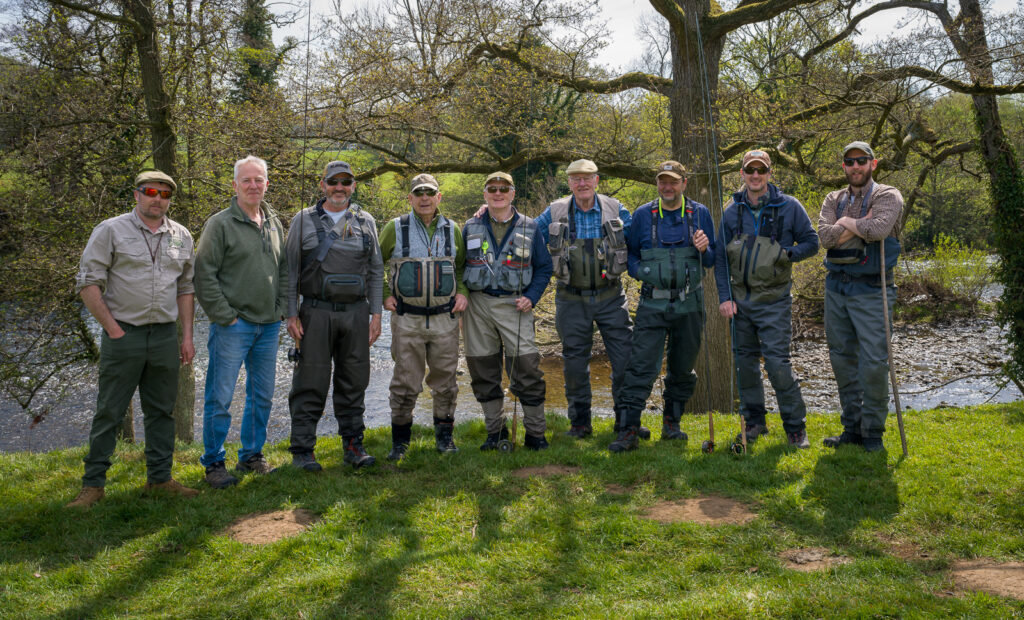
Jeremy Lucas (3rd from left) spent a day with Tanfield Angling Club Members
The contrast of the following day, up in the woods at Mowbray – or was it a gorge in Scotland or Norway? The bluebells, wild garlic and pink campion softened the slopes, and we did see a few upwing spinners and caddis in the air, though almost no rises on the smooth water (as we had seen this time last year, in abundance), so I focused on the fast water running into the long pool, with exactly the rig above.
One hour, and thirty rises later, produced six fish, all trout. Some of the fresh air rises were probably the same fish, rising multiple times until it was caught or pricked. All these were in a comparatively small area of fast water, requiring me hardly to move my feet. This is a good thing on the Ure, because I have found it rather difficult to wade here, with the rubber soled wading boots I have been using. A lesson learned, though; my next visit will see me with felt soled boots. Perhaps I might finally give way to the good sense of a wading staff.
My final day at Tanfield was spent with some of the members so that I might give some guidance as to my approach. It was another bright day, following a cold night, and barely any insects on the water. I explained why I searched out the fast, broken water in these conditions, where fish might be expected to be – cover, oxygen and food. It was revealing that almost no fish were to be seen all day on the smoother glides and pools, while some members managed to rise and catch a few trout where we found the suitable water.
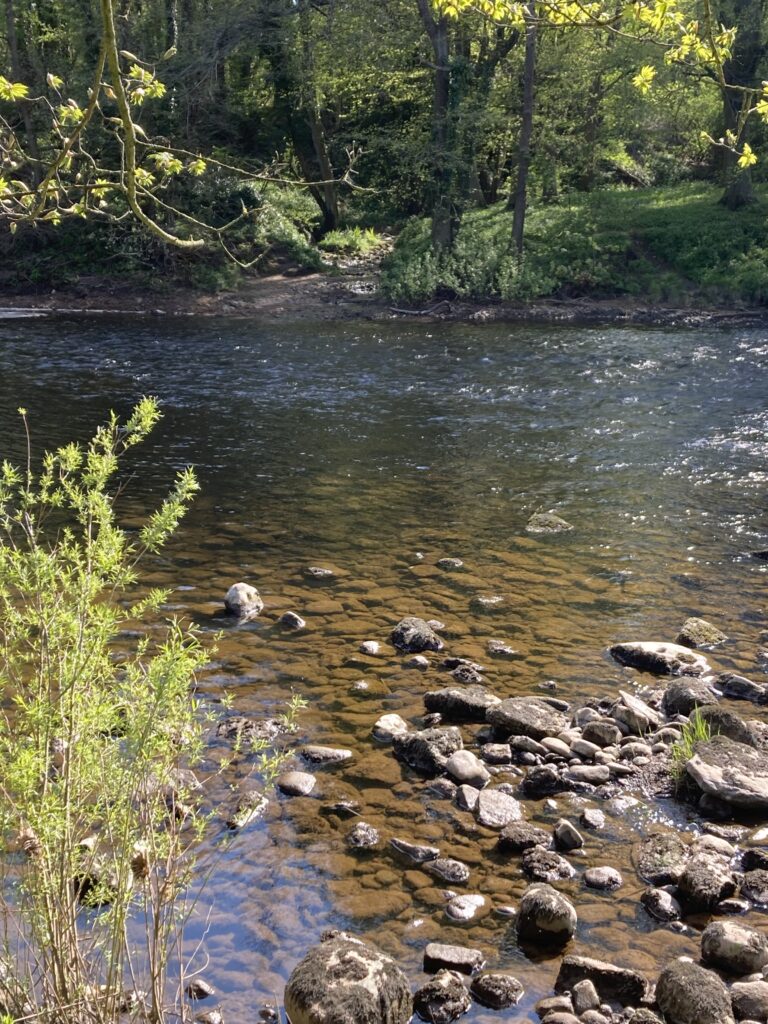
I revealed that time and again, it was fast water that had been most productive for me; places where the majority of anglers pass by. I discovered this many years ago, actually with spiders, but soon learned that dry fly is more consistent. I showed members my Oppo and plume tip variants, explaining how these have become the backbone of my fishing on any trout river in the world. I tried to impress more generally how a minimalistic approach, casting off the various myths and old sporting habits, in preference of a more analytical, instinctive assessment of the river, changes everything. If I were a fish, where would I be?
And here I am, now in Kent, and although I’ll soon be on my beloved chalk streams in northern France, I miss Tanfield so much. I feel so welcome there, completely at home. Thank you, Rob, Nigel, the members I met, the lovely staff at the Bruce Arms; I am already plotting my next visit. I need to reduce the number of fresh air rises, or rather increase the hook up rate, and I have much more that I would enjoy passing on to the members.