Tanfield Angling Club was founded in 1892 by Francis Maximilian Walbran (1851–1909), an energetic fly fisherman, gifted journalist, and lifelong devotee of the sport.
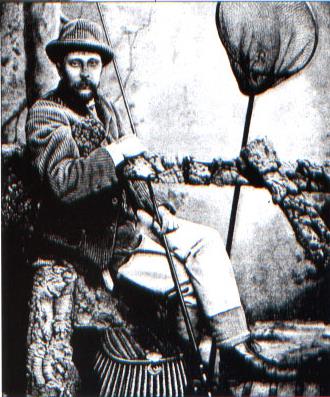
Born and educated in Ripon, Walbran discovered fishing as a teenager through his father and older cousin. Although he began his career as a travelling salesman for a Leeds branch of a Hull-based dyestuffs company, every spare moment was spent on the water.
By 1877, his letters on fishing—especially on the River Yore around Tanfield and Masham—were appearing in the Fishing Gazette. The arrival of the Leeds–Harrogate railway and its branch line to Tanfield in 1885 only increased interest in the area. A year later, The Field began publishing his reports, soon appointing him “Special Yorkshire Correspondent.” Eventually, he left his sales job to pursue journalism and fishing full‑time.
Walbran married, moved his family from Leeds to Pool in Wharfedale, and in 1887 named his fourth child George Marston—honouring the editor of The Field, who later became an Honorary Member of the new club. His articles often described memorable days on the Yore, including one outing where he caught 19 grayling (17 lb) and trout totalling 16¼ lb. He also offered guiding services in the Tanfield and Masham area. One early piece ominously recounts a “sudden ducking” in the freezing Wharfe.
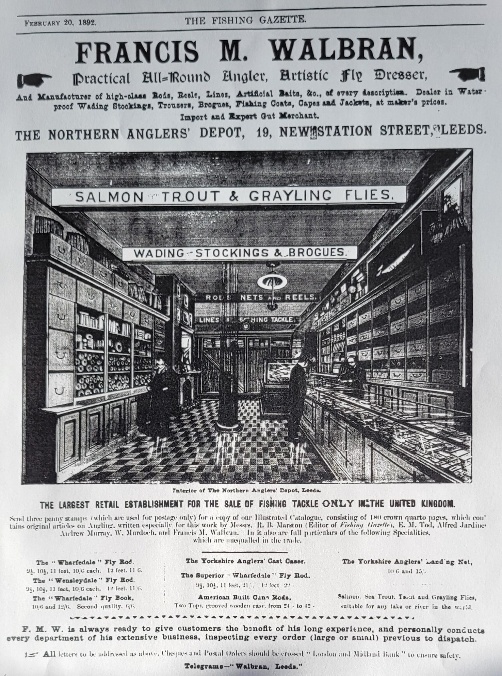
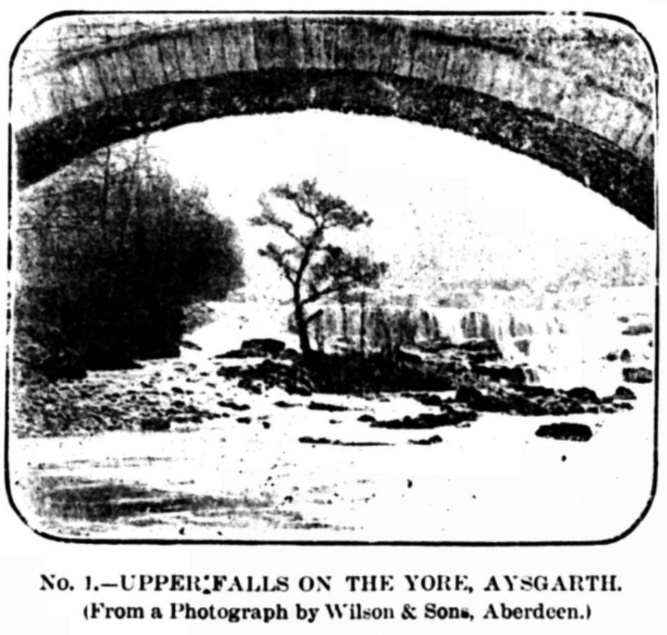
By the late 1880s, Walbran was recognised as an authority on trout and grayling. In 1888 he opened the Northern Angler’s Depot near Leeds station—perfectly placed for travelling anglers. He advertised himself as an “Artistic Flydresser” and produced both a Guide to Yorkshire Streams and a 120‑page illustrated catalogue. His lectures, accompanied by “100 limelight views” of the Yore and Wharfe, drew large audiences eager to see the region’s scenery.
Founding Tanfield Angling Club
Walbran’s deep affection for the Yore around Tanfield, combined with his network in the angling press, helped him rally support for a new club. He knew the stretch offered excellent sport—“the head of grayling was particularly notable”—and that its scenery and atmosphere were ideal for anglers. Rumour suggests he also appreciated the two nearby pubs!
He secured a 21‑year lease from riparian owner Thomas Arton for exclusive fishing rights from the upper end of Hackfall to a mile below Tanfield Mill, with only a few short exceptions on the south bank.
On 8 March 1892, twenty of the thirty founding members met at the Queen’s Hotel in Leeds to formally establish Tanfield Angling Club. The committee included:
- Chairman: Arthington Worsley (York)
- President: Marquis of Ripon
- Vice President: Thomas Arton (Tanfield Lodge)
- Treasurer: W. G. McLaughlin
- Hon. Secretary: Francis Walbran
Honorary Members elected at Walbran’s proposal were:
- William Senior (“Redspinner”), The Field
- F. M. Halford (“Detached Badger”), The Field
- R. B. Marston, Editor, Fishing Gazette
The lease cost £40 per year. Joining fees were two guineas, with annual subscriptions set at four guineas.
Three months later, the Fishing Gazette reported:
- River Watcher: Ralph Coldbeck
- A hatchery was being built
- Yearling trout had been stocked
- Club waters extended 6¼ miles, from Hackfall Woods to the Bell Flask weir below West Tanfield
Membership rules included:
- Maximum 30 members
- Up to three guest day‑tickets per member (2s 6d each)
- Trout season: April 1–October 1
- Grayling season: August 1–February 15
- Minimum trout size: 8 inches
- Permitted methods: artificial fly, minnow, or worm
The Hatchery
Knowing the river lacked natural spawning streams, Walbran understood that regular stocking was essential. The club therefore built its own hatchery—likely with significant help from River Watcher Ralph Coldbeck. The original building still stands.
Today, the hatchery produces around 1,000 trout annually from brood-stock taken and returned to the River Ure. After growing on, most are released into the river, with some sold to other clubs on the Yore. This self‑sustaining approach, overseen by the River Keeper, remains central to the club’s success and distinctive appeal.
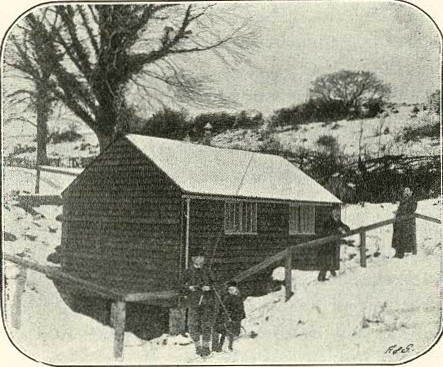
Photo taken c.1895
Walbran’s Final Years
Walbran served as club secretary until his tragic death on 15 February 1909, when he drowned on his favourite stretch below Tanfield Bridge—the last day of the grayling season. He is buried at St Nicholas Churchyard, West Tanfield.
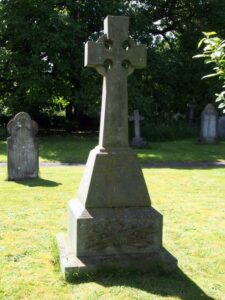
Walbran’s Gravestone
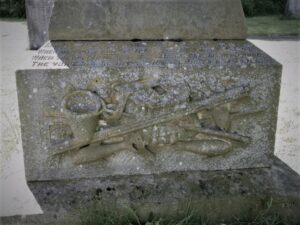
Pedestal inscription:
“And there shall the toiler rest from his labour
When memory’s bright stream shall become not a rill,
When the rude hand of time shall spare not his neighbour
The voice of the river shall sing to him still.’
Below this, his net, rod and creel are carved – along with three Grayling.
Publications and Influence
Walbran’s contributions to angling literature were substantial. His works include:
- British Angling Flies (revised editions, 1882 & 1888)
- British Angler: Salmon Trout and Grayling (1889)
- The Northern Angler weekly journal (1892)
- Piscatorial Hints (1893)
- Grayling and How to Catch Them (1895)
He wrote for The Field (“Wharfedale”), Leeds Mercury and Yorkshire Evening Post (“Halcyon”), and the Fishing Gazette.
A founder member of London’s Fly Fishers Club, he fished with pioneers such as Frederick M. Halford and G. E. M. Skues. He also served on numerous angling associations across Yorkshire.
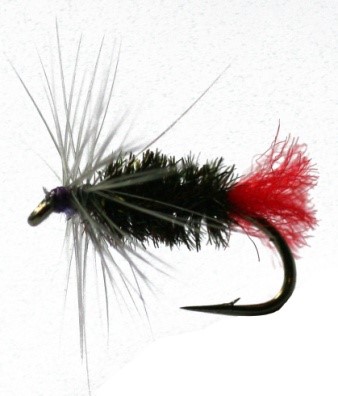
Walbran credited himself with introducing the Red Tag to Yorkshire rivers in 1878, calling it “probably the very best” grayling fly. On its first outing on the Yore, he caught 25 grayling with it.
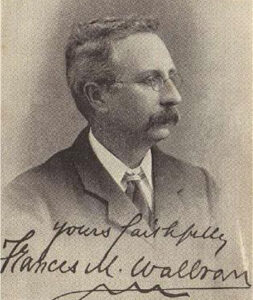
The River Keepers and the Sturdy Dynasty
Tanfield Angling Club has always employed a river keeper. After Ralph Coldbeck retired in 1895, J. Wild briefly held the role until 1899, when Tom Sturdy—first of a remarkable family line—was appointed “Beck Watcher” at £1 per week.
Known as “Silent Tom,” he was reputed to “train fish to be free risers,” perhaps aided by his successful grayling pattern, Sturdy’s Fancy—a Red Tag variant with a white hackle.
Tom served for 50 years, training his son Norris to succeed him in 1949. Poor health forced Norris to step down, and Tom’s nephew William (Bill) Sturdy took over in 1953, serving until 1987. In total, the Sturdy family dedicated 88 years to the club. Norris’s twin sister, Doris, continued selling guest tickets until 1992.
Sturdy’s Fancy